
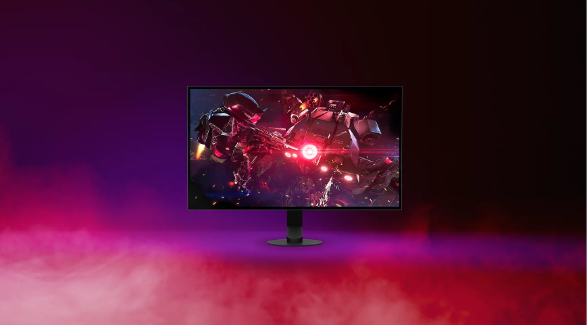
For years, the “holy grail” of competitive gaming was the jump from 60Hz to 144Hz. It was a revelation. Then came 240Hz, then 360Hz. But in 2026, Sony has decided to stop playing the “incremental” game and just blow the doors off the hinges. With the announcement of the Inzone M10S II, Sony is introducing a panel that hits a staggering 720Hz.
But before you reach for your wallet, there’s a catch, and it’s a big one. This monitor isn’t just a piece of tech; it’s a psychological experiment in how much resolution a gamer is willing to sacrifice for a few extra milliseconds of speed.
The 720p Trade-Off: Speed at the Cost of Sight
The Inzone M10S II is a 24.5-inch beast built on LG’s fourth-generation Tandem WOLED panel. While Alienware has made QD-OLED technology more affordable for the average user by focusing on rich visuals and value, Sony is pushing this same fundamental panel tech to its absolute physical speed limit. In its “standard” mode, it’s an impressive QHD (1440p) monitor running at 540Hz. That alone is enough to make a pro gamer’s eyes water with joy.
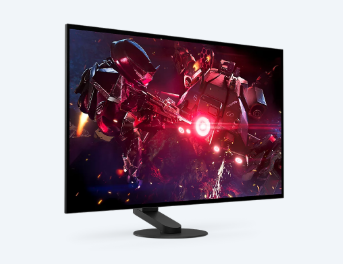
However, Sony’s headline-grabbing feature is its “Competitive Mode.” To hit 720Hz, the monitor has to drop its resolution down to 720p. Yes, you read that correctly. In 2026, Sony is asking you to go back to the resolution of a Nintendo Switch to achieve a refresh rate that most human eyes literally cannot distinguish from 540Hz. It’s a bold move that caters to the absolute 0.1% of players who believe that every single frame is the difference between a win and a loss.
Engineering for the Pro-Player “Purist”
Beyond the blistering speed, Sony has made several “quality of life” tweaks based on feedback from the esports community:
- The 0.02ms Response Time: Because it’s an OLED, the response time is essentially instantaneous. To make things even sharper, Sony added a new motion blur reduction algorithm that uses Black Frame Insertion without killing the brightness.
- The Minimalist Stand: Pro gamers often tilt their keyboards at extreme angles and sit inches from the screen. Sony redesigned the stand with a tiny footprint and a massive tilt range (up to 35 degrees) to clear up desk space for giant mousepads.
- Anti-Glare Protection: They’ve added a “Super Anti-Glare” film, which is vital for tournament stages with harsh overhead lighting.
The “H6 Air” and the Nostalgia Play
Sony isn’t just focusing on the eyes; they’re coming for the ears too. They announced the Inzone H6 Air open-back wired headphones for $200. These are essentially “gamer-fied” versions of their $400 studio monitor headphones (the MDR-MV1). They are incredibly light at 199 grams and feature a specialized RPG/Adventure profile that enhances environmental sounds like footsteps and wind.
And for those who grew up in the 90s, Sony is releasing a translucent “Glass Purple” version of their wireless earbuds. It is a direct, nostalgic nod to the iconic Atomic Purple Nintendo 64, proving that even high-tech gear isn’t above a little “retro-baiting.”
The Bottom Line: Is 720Hz a Scam?
Priced at $1,100, the Inzone M10S II is a luxury item for people who have already optimized every other part of their lives. For the average gamer, playing at 720p in 2026 feels like a massive step backward.
However, in the world of high-stakes esports, where “organ rejection” happens the moment a frame drops, Sony is betting that players will pay a premium for the feeling of being faster than the competition. It’s not just a monitor; it’s a status symbol for the obsessed.
The peripherals are available now, but if you want that 720Hz panel, you’ll have to wait until later this year to see if your eyes can actually handle the speed
