
For the past few years, the action camera market has felt like a slow-motion car crash for the traditional giants. We’ve seen the “incumbents” get squeezed by specialized rivals who figured out that consumers don’t just want a camera; they want an exit strategy from mediocre video quality. We’ve been fed the lie that “good enough” is acceptable for small-form-case cameras.
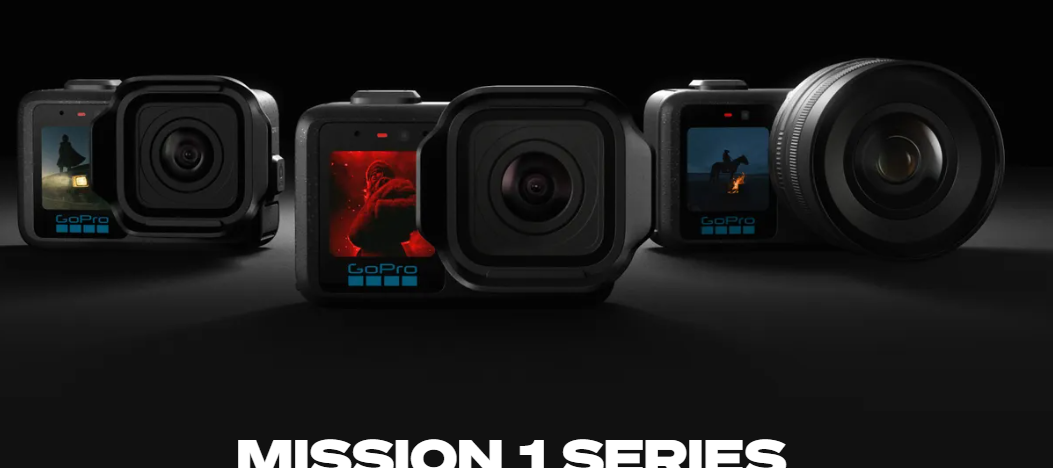
But with the announcement of the Mission 1 series, GoPro isn’t just fighting back; they are attempting to rewrite the physics of what a compact cinema tool can do. This isn’t just another Hero update. This is a massive, high-margin middle finger to the idea that action cameras have hit a ceiling.
The Death of the “Good Enough” Action Cam
The controversy in the camera world has always been about size versus quality. You either get a tiny camera with a tiny sensor or a giant camera with a cinematic look. GoPro just shattered that compromise. By integrating a 50-megapixel one-inch sensor into the Mission 1 line, they are moving into the territory of high-end mirrorless cameras.
This sensor is massive. It features 3.2μm fused pixels in 4K mode, allowing for a staggering 14 stops of dynamic range. To put that in perspective, that is the kind of light-handling capability you expect from a professional film set, not a device you strap to a mountain bike. It protects highlights while digging detail out of the darkest shadows, solving the low-light noise problem that has plagued action cams since their inception.
The Mission 1 Pro ILS: A Sophisticated Rebellion
The most disruptive move in this lineup is undoubtedly the Mission 1 Pro ILS. For the first time, we are seeing a flagship action camera with an Interchangeable Lens System (ILS) compatible with Micro Four Thirds lenses.
This is a high-stakes play for “pro-sumers” and indie filmmakers. By allowing users to mount glass from Panasonic or OM System, GoPro has created the world’s smallest rugged cinema camera. While you probably won’t be strapping a 400mm lens to your helmet, the ability to use high-quality prime lenses on a motorbike or car rig opens up a tactile, cinematic aesthetic that digital “fish-eye” lenses simply cannot replicate. It’s the “Zen of Stripping Down” moving away from software-fixed images and back to the raw power of optics.
The GP3 Processor: Speed Without the Meltdown
Innovation is often a marathon run in a sauna; heat is the enemy of small electronics. Most 8K cameras on the market turn into expensive paperweights after ten minutes due to thermal throttling. GoPro’s new GP3 Processor, built on a power-efficient 5nm design, claims to have solved the “meltdown” crisis.
The stats are, frankly, ridiculous:
- 8K at 60 fps: Continuous recording for 37 minutes with zero airflow.
- 4K at 240 fps: For super-smooth slow motion.
- 1080p at 960 fps: A specialized high-speed mode that turns a split second into a cinematic epic.
Because the chip is more efficient, the new Enduro 2 battery can push over three hours of 4K recording on a single charge. It’s a sophisticated solution to the “battery anxiety” that usually kills a day of shooting.
Audio for the “32-Bit Float” Era
We have digitized everything onto flat surfaces, but high-end creators are begging for “friction” in their audio, meaning depth and reality. The Mission 1 series introduces a four-mic system with 32-bit float audio.
If you aren’t an audio engineer, here is why that matters: 32-bit float is virtually impossible to “clip.” Whether you are recording the whisper of the wind or the roar of a jet engine, the file captures enough data that you can fix the levels in post-production without losing a single drop of quality. Coupled with the new Wireless Mic System (which looks suspiciously like a high-end rival’s “Mini” system), GoPro is positioning itself as a complete vlogging and cinema ecosystem, not just a hardware manufacturer.
The Strategy: Differentiation Through Excellence
For product leaders, the Mission 1 release is a masterclass in “Pull, don’t Push” management. GoPro didn’t just ask people to buy a new camera; they created a result so undeniable that serious creators will feel forced to upgrade.
By adding features like 4:3 Open Gate capture (which lets you shoot once and export for both YouTube and TikTok without losing quality) and GP-Log2 for professional color grading, they are targeting the “Tactile Gap.” They are giving experts the professional buttons and dials, both literal and digital, that they crave.
The New Rule: Progress Isn’t a Straight Line
The era of thinner and lighter is hitting a wall of human exhaustion. Users are tired of disposability. The Mission 1 series is built to be a heritage piece of hardware. It’s compatible with the Hero 13 batteries (though it prefers the new ones), it uses a 14 percent larger OLED rear display, and it features bigger, raised buttons designed to be used with gloves.
By embracing the rugged cinema niche, GoPro has achieved three things their competitors can’t:
- A Marketing Position of Power: Being the only action cam that takes Micro Four Thirds lenses is a world-class differentiator.
- Sustainability of Value: A 50MP 1-inch sensor isn’t going to be “obsolete” in 18 months.
- Emotional Resonance: You don’t form a bond with a disposable gadget, but you do fall in love with a piece of hardware that handles 8K 60p like a pro.
The most innovative thing GoPro did wasn’t making the camera smaller; it was making it better. If your gear doesn’t offer an exit strategy from mediocre, “noisy” digital video, it’s just more clutter in a world already drowning in it. Mission 1 is the heavy hitter the industry has been waiting for.
Check out The Ultimate 2026 iPhone Guide: Which Model is Actually Worth Your Money? With the launch of the iPhone 17e and the radical iPhone Air, Apple’s lineup is the most diverse it has ever been, but more choices often lead to more confusion.
