
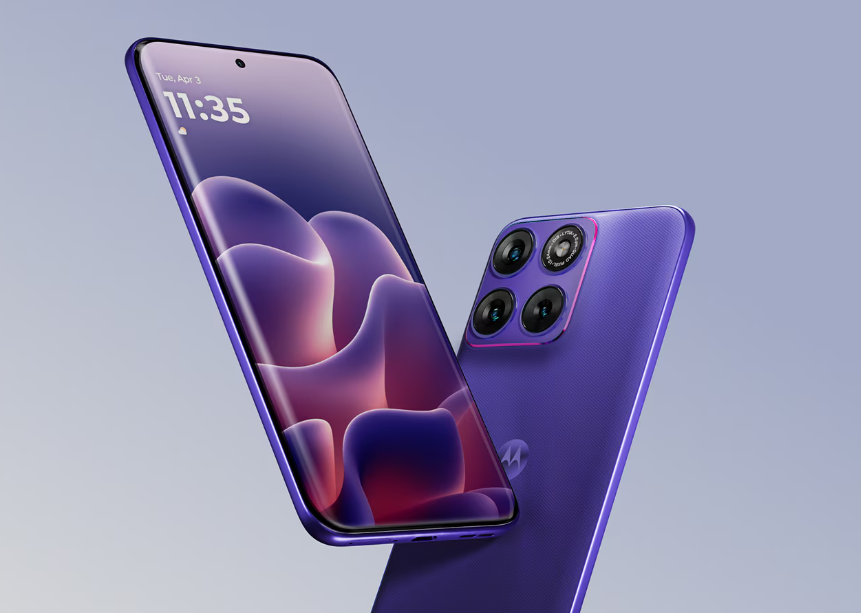
For the last decade, the tech industry has successfully brainwashed us into believing a very expensive lie: that if your phone doesn’t cost four figures and features a processor capable of landing a rover on Mars, it’s “budget” trash. We’ve been conditioned to accept incremental updates and skyrocketing prices as the natural order of things. But then a device like the Motorola Edge 70 Fusion arrives, and suddenly, the emperor has no clothes.
Motorola has just pulled the curtain back on its latest mid-range contender for the European and international markets, and it is a masterpiece of psychological warfare against the flagship status quo. It asks a very simple, very uncomfortable question: Why are you paying for specs you can’t even see?
The Quad-Curved Illusion:
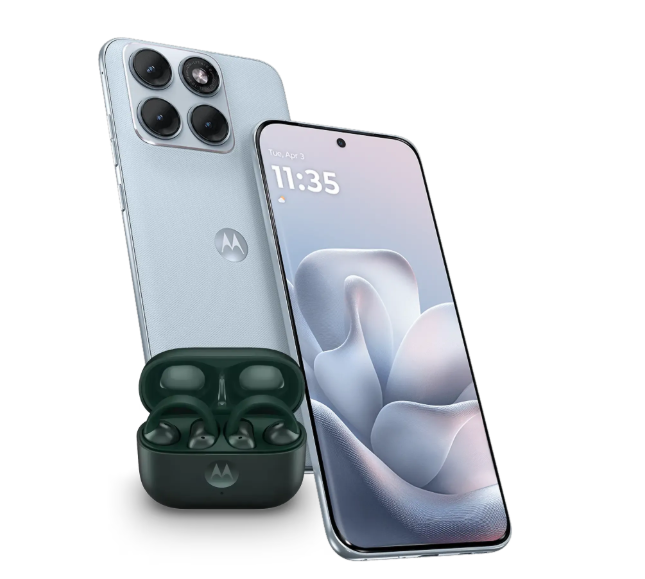
Most modern smartphones are starting to feel like utilitarian glass bricks. Motorola decided to go in the opposite direction, leaning into a “world-first” quad-curved display. This isn’t just about the left and right sides of the screen sloping away; the glass literally melts into the frame on all four sides.
The result? A device that feels more like a polished river stone than a piece of hardware. When you hold it, the 6.78-inch AMOLED panel feels infinite. But it’s not just a pretty face:
- The Brightness War: With a peak brightness of 5,200 nits, this screen isn’t just readable in direct sunlight it’s aggressive. It’s brighter than almost every $1,200 flagship currently sitting on a Best Buy shelf.
- Fluidity: At a 144Hz refresh rate, the interface moves faster than your eyes can likely track, making every swipe feel instantaneous.
The Pantone Partnership
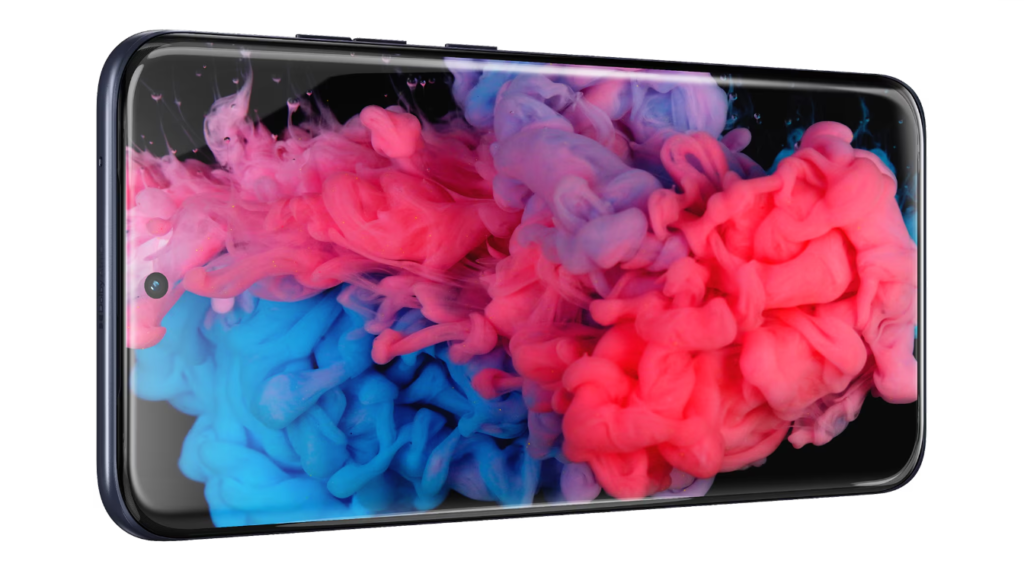
Let’s talk about the colors, because Motorola is doing something the “Big Two” are too scared to try. By partnering with Pantone, they’ve moved away from boring metallic finishes and toward tactile, fabric-like textures.Whether it’s the deep Orient Blue, the ethereal Country Air, or the bold Sporting Green, these aren’t just colors,they’re statements. It’s a phone designed for people who treat their tech as part of their outfit. And yet, beneath that runway-ready exterior lies a tank. It boasts IP68 and IP69 water resistance and MIL-STD-810H durability. You can literally drop this “fashion” phone in a sink or a sandpit, and it will keep on ticking.
The Hardware
Tech enthusiasts will point to the Snapdragon 7s Gen 3 processor and claim it isn’t powerful enough.Unless you are rendering 8K video on your commute or playing high-end PC ports, you do not need a flagship chip. The 7s Gen 3 offers a 15% performance boost over last year’s model, which is more than enough for snappy multitasking and high-speed browsing. Motorola didn’t spend your money on a processor you’d never push to its limit; they spent it on the Sony Lytia 710 sensor.
This 50MP main camera, equipped with Optical Image Stabilization (OIS), is the great equalizer. It captures the kind of crisp, vibrant, low-light photos that used to be the exclusive territory of the “Pro” models. Combined with a 32MP selfie camera that shoots in 4K, the Edge 70 Fusion proves that social media stardom doesn’t require a $1,200 entry fee.
The $500 Ultimatum
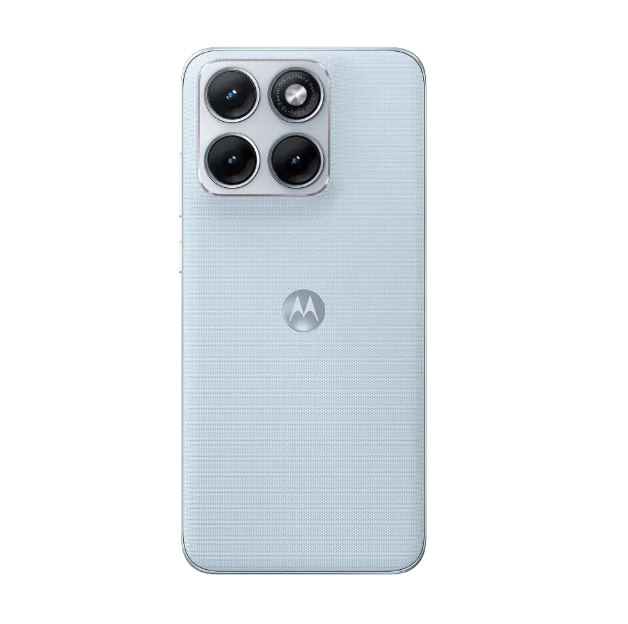
At a starting price of roughly $503 (€430), Motorola is effectively calling out the entire industry. They are offering a 5,200mAh battery that lasts all day, 68W charging that gets you back in the game in minutes, and a design that looks more expensive than an iPhone 15 Pro Max ,all for less than half the price.The Edge 70 Fusion isn’t just a phone; it’s a protest. It’s proof that we’ve been overpaying for “prestige” while mid-range devices have quietly caught up and, in some cases, surpassed the giants. If you’re in Europe and you’re still looking at a flagship, you have to ask yourself: Am I buying a tool, or am I buying a logo?
