
Finding the best laptop at an affordable price has become surprisingly difficult. Buyers increasingly have to choose between weak processors, poor displays, uncomfortable keyboards, limited storage, and laptops that look inexpensive even when their prices are not. At the same time, manufacturers are adding more features, services, and connected experiences that can affect how people use their computers. For example, the growing conversation around ads and tracking coming to computer monitors shows how the modern PC experience is changing beyond traditional hardware specifications.
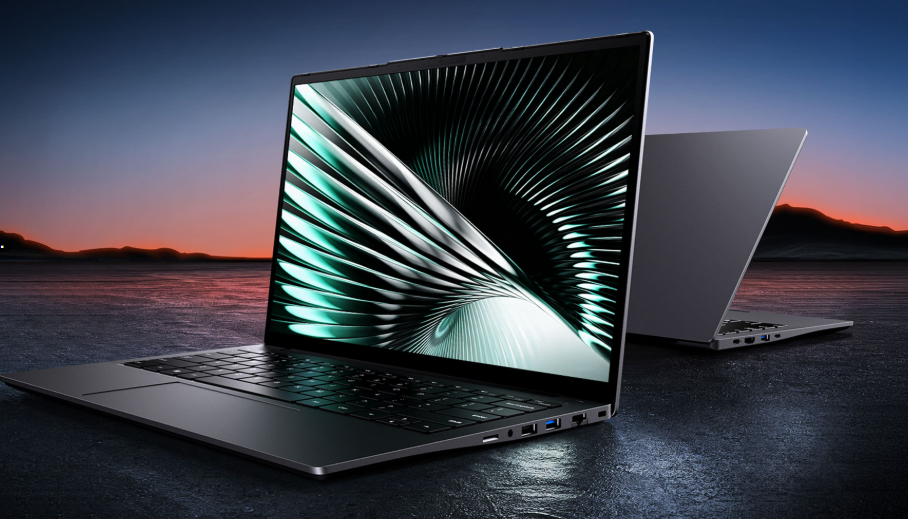
That makes Chuwi’s new Unibook particularly interesting. The Chinese PC manufacturer has introduced a budget-friendly laptop built around Intel’s newer Wildcat Lake processor family. With 8GB of RAM, 256GB of storage, and an introductory price of $449, the Chuwi Unibook is positioned directly against affordable laptops that typically force buyers to compromise on one or more important features.
It also arrives at an interesting moment for the laptop market.
Apple’s MacBook Neo was supposed to demonstrate that an inexpensive laptop could still deliver a polished experience. However, Apple’s subsequent price increase weakened some of the appeal of its original $599 starting point. That leaves room for Windows manufacturers to compete aggressively. Chuwi appears ready to take advantage of that opening.
Chuwi Unibook: A Budget Laptop With a Clear Purpose
The Chuwi Unibook is not trying to compete with premium laptops on every specification. Instead, its appeal comes from offering the essentials at a significantly lower price.
The introductory $449 price puts it below many of the newer Windows laptops using Intel’s Wildcat Lake processors. Chuwi lists a regular price of $569, although it is unclear how long the introductory pricing will remain available.
That distinction matters. Budget laptop pricing can change quickly, and a product that looks like an exceptional bargain at $449 may become considerably less attractive if its price moves close to $600.
Still, at $449, the Unibook is immediately worth considering for students, office workers, casual users, and anyone who needs a straightforward Windows computer without paying for unnecessary extras.
The bigger question is whether the hardware underneath can deliver a satisfying everyday experience.
Intel Wildcat Lake Gives the Unibook an Important Advantage
One of the most interesting aspects of the Chuwi Unibook is its processor. Intel’s Wildcat Lake platform represents a different approach to the lower end of the market. Instead of simply recycling older processor designs for cheaper machines, Intel developed these lower-performance chips using building blocks and manufacturing technology related to its newer processor generations.
That gives affordable Windows laptops a more interesting path forward. For years, one of the biggest problems with cheap laptops has been their reliance on processors that were already outdated when the machines launched. A new laptop could technically be new while its underlying hardware was several years old.
Wildcat Lake changes that equation. The Unibook is therefore not simply an inexpensive laptop using leftover components. It is part of a broader effort to bring newer processor technology into cheaper computers.
That does not mean it will compete with a high-end MacBook or premium Windows ultrabook. It is not designed for demanding professional workloads, intensive video production, or serious gaming. Instead, the processor should make more sense for everyday computing.
That includes browsing the web, writing documents, watching videos, attending online meetings, managing emails, using productivity applications, and handling lighter multitasking.
For this category of computer, that is exactly what matters.
8GB RAM Is Enough-but Only Just
The Chuwi Unibook comes with 8GB of RAM, which is becoming an increasingly important consideration when shopping for the best laptop on a budget.
Eight gigabytes remains usable for everyday computing, but it is no longer a generous amount of memory.
Modern browsers can consume substantial memory, particularly when users keep dozens of tabs open. Add Microsoft Office, messaging applications, cloud-storage software, music streaming, and background services, and 8GB can become restrictive.
For a student or casual user who primarily works with a few applications at once, however, 8GB can still be perfectly workable. The key is managing expectations. This is not a laptop designed for heavy multitasking. If your typical workflow involves large spreadsheets, multiple demanding applications, professional creative software, and dozens of browser tabs simultaneously, you will probably want a machine with more memory.
But if the priority is getting a good budget laptop for ordinary tasks, 8GB remains a reasonable starting point.
256GB Storage Is Another Compromise
Storage is the other obvious limitation. The Unibook includes a 256GB storage drive, which is enough for Windows, productivity applications, documents, and a modest collection of files. But users who store large video libraries, games, photographs, or other media locally could run out of space fairly quickly.
This is becoming a familiar compromise in affordable laptops. Manufacturers keep prices down by limiting storage, while cloud services and external drives give users ways to expand their capacity later. For someone buying a laptop primarily for schoolwork, browsing, office productivity, and streaming, 256GB may be sufficient. For anyone looking for a computer that will store everything locally, 512GB or more would be preferable.
That is why the Unibook’s $449 price is important. The limited storage is easier to accept when the overall cost is significantly lower than many competing machines.
Can It Really Challenge the MacBook Neo?
This is where the comparison becomes particularly interesting. Apple’s MacBook Neo established an important idea: a relatively inexpensive laptop does not have to feel cheap.
It focused heavily on the fundamentals of build quality, display quality, keyboard experience, battery life, and overall usability.
That philosophy has forced Windows PC manufacturers to reconsider what buyers actually want from affordable laptops.
The Chuwi Unibook approaches the same market from a different direction. Rather than trying to copy Apple’s entire ecosystem, Chuwi is competing primarily on price while using newer Intel technology to keep the hardware relevant. At $449, that makes the Unibook considerably more interesting.
However, price alone does not make something the best laptop. The overall experience still matters. A laptop can have an excellent processor and still disappoint if its keyboard is uncomfortable, its display is poor, its speakers are weak, or its build quality feels fragile.
That is one reason the Unibook’s real-world experience matters more than its specification sheet.
The New Budget Laptop Competition Is Getting Serious
Chuwi is not operating in isolation. Dell, Acer, Asus, Lenovo, and other major manufacturers have been developing affordable laptops around Intel’s newer lower-end processors. That means consumers should have more choices than they did previously.
For example, Dell has introduced lower-priced systems aimed at the same general market, while Acer has announced machines designed to compete in the affordable performance segment.
The result could be good news for shoppers.
Competition forces manufacturers to improve.
Instead of selling a $500 laptop with an outdated processor and mediocre components, companies increasingly have to explain why their product deserves the money.
This could eventually push better keyboards, improved displays, stronger battery life, and better construction further down the market.
And that is exactly what budget laptop buyers need.
What About Gaming?
The Chuwi Unibook should not be purchased as a gaming laptop.
Its hardware is aimed at everyday productivity rather than demanding games.
Casual games and less demanding titles may be possible depending on the software and settings, but anyone searching specifically for the best laptop for gaming should look elsewhere. Gaming requires a different hardware balance, particularly when it comes to graphics performance, cooling, and sustained power.
The Unibook makes more sense as a productivity machine.
Think documents, web browsing, online learning, video calls, entertainment, and everyday work rather than AAA gaming.
A Better Fit for Students and Everyday Users
One area where the Unibook could make considerable sense is education.
Students often need a laptop capable of handling research, word processing, presentations, video meetings, online learning platforms, and dozens of browser-based services.
They do not necessarily need a $1,000-plus computer.
A $449 machine that handles those fundamentals properly could therefore be attractive.
The same applies to people who primarily use a laptop for work-from-home tasks.
Email, spreadsheets, documents, browser applications, video conferencing, and cloud services do not necessarily require an expensive workstation.
However, buyers should consider how many years they expect to keep the machine. A laptop with 8GB of RAM and 256GB of storage may feel perfectly adequate today, but software and browser requirements tend to increase over time.
Modern Laptop Features Are Becoming More Important
The laptop market is also changing beyond processors and storage.
Users increasingly care about privacy, screen protection, notifications, artificial intelligence, connectivity, and how computers interact with other devices.
Microsoft’s newer business-focused Surface machines, for example, show how manufacturers are experimenting with features designed to protect what’s displayed on a user’s screen and provide alerts while they work. This broader shift is worth considering when comparing the new business Surface laptops with traditional budget computers.
Likewise, consumers who use their phones for entertainment and mobile applications should pay attention to security when installing software. GadgetVerve’s guide to what to check before installing sports and bingo apps on Android 17 highlights how digital safety increasingly overlaps across phones, computers, and connected services.
The Unibook is therefore arriving in a market where the definition of a good laptop is becoming broader.
Is the Chuwi Unibook the Best Laptop Under $500?
That depends heavily on what you expect from it.
At its $449 introductory price, the Unibook has a compelling argument.
You get a relatively modern Intel processor platform, 8GB of RAM, and 256GB of storage without crossing the $500 threshold. For basic productivity, education, browsing, entertainment, and everyday work, that combination could be enough for many people.
But it is important not to confuse affordability with perfection.
The 8GB memory limit means heavy multitaskers should consider more capable alternatives. The 256GB storage capacity is also modest, particularly for users who keep lots of media or large applications on their machines.
And because the $449 figure is an introductory price, shoppers should check the current price before purchasing.
If the laptop remains close to $449, its value proposition becomes much stronger.
If it moves toward $569, the competition becomes tougher because buyers gain access to more established brands and potentially better-equipped alternatives.
Final Verdict
The Chuwi Unibook is an interesting response to one of the biggest problems in today’s affordable PC market: finding a laptop that does the basics well without becoming unnecessarily expensive.
Its biggest advantage is not that it has spectacular specifications. It does not. Its strength is that Chuwi has combined a newer Intel processor platform with sensible entry-level specifications and an aggressive introductory price.
That makes it a potentially attractive choice for students, casual users, remote workers, and budget-conscious buyers who simply need a reliable everyday computer.
Whether it becomes the best laptop in its price category will ultimately depend on the details of its real-world performance, display, keyboard, battery life, build quality, and long-term reliability. Still, the Unibook represents something encouraging for consumers.
The affordable laptop market is becoming more competitive, and manufacturers can no longer assume that buyers will accept outdated hardware simply because a machine is inexpensive.
At $449, Chuwi has put forward a serious budget contender. If the company can deliver a solid everyday experience to match the price, the Unibook could prove that you do not always have to spend a fortune to get a laptop that gets the important things right.
