
The modern consumer tech ecosystem is increasingly split between two design extremes. On one side, companies are engineering ultra-compact, hyper-focused form factors, much like how the Insta360 Mic Pro packs studio-grade recording capabilities into a device that looks exactly like a minimal pin badge. On the other side, foldable smartphones are attempting to offer massive widescreen canvases that collapse to fit cleanly inside your pocket.
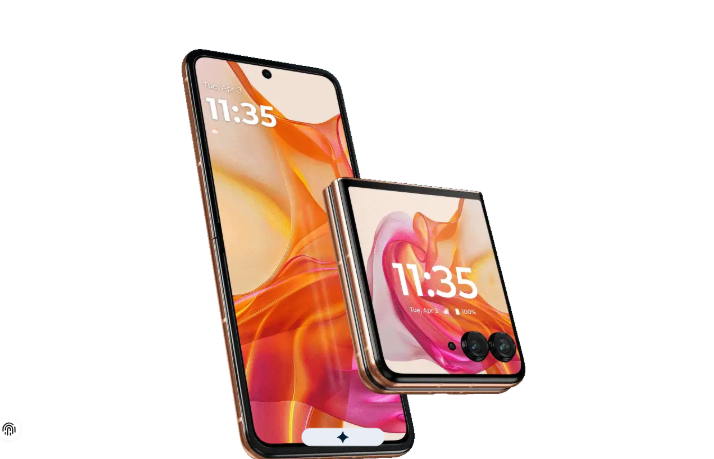
Motorola has been a dominant force in this hardware revival, but its latest entry, the Motorola Razr Plus (2026), finds itself trapped in an awkward corporate middle ground. Ringing up at an elevated $1,100, this updated clamshell faces tough market conditions and a severe identity crisis, failing to deliver enough meaningful innovations to separate itself from its much cheaper sibling.

The Hardware Specifications
To understand why this premium flip phone struggles to assert its value, it helps to look at how it bridges the gap between Motorola’s baseline model and its ultra-premium tier.
A Roomy Cover Screen Marred by Software Constraints
The primary physical selling point of the Razr Plus is its expanded 4-inch OLED cover display, which stretches across almost the entire front face of the chassis. When resting on a desk or propped open like a chair for video calls, this panel works perfectly for checking local weather timelines or quickly replying to texts.
But the bigger screen is held back by software problems that affect how apps fit and work:
- Camera Cutout Issue: The phone’s own menus use the full 4-inch screen, but most third-party apps are squeezed into the small area above the camera lenses.
- The Scaling Problem: Standard chat programs like WhatsApp and Facebook Messenger gracefully shrink to match this compact layout. However, more complex interfaces feel incredibly claustrophobic, sometimes requiring pixel-perfect accuracy just to pull up digital travel tickets or QR codes.
When you open the phone, you get a big 6.9-inch main screen. Social media feeds and movies look great, but regular TV shows need to be zoomed in, or you’ll see big black bars on the top and bottom.
Silicon Trade-Offs and Real-World Endurance
Inside, Motorola has chosen to use the Snapdragon 8S Gen 3 processor for the third year in a row, which is a questionable choice.
With 12GB of RAM, the phone handles everyday tasks, navigation, and light gaming easily. It can run games like Fall Guys on high settings and Fortnite on medium. But with more demanding games, it lags behind other $1,100 phones and newer foldables with better chips.
The older processor also affects battery life. The 4,500-mAh battery usually lasts through a workday, but after three hours of screen time, you’ll have about 30% left.
On the bright side, charging is fast. The 45-watt wired charger can get the battery to 58% in 30 minutes. The phone also supports 15-watt wireless charging and 5-watt reverse wireless charging for small accessories.
Capable Imaging and Nostalgic Camcorder Tricks
The Razr Plus cameras are solid, though not the best out there. On the outside, you get a 50-megapixel main camera and a 50-megapixel ultrawide. Inside, there’s a sharp 32-megapixel selfie camera.
Daylight Scenes – Crisp Textures, Vivid Colors, Low Digital Noise
Low-Light Scenes – Acceptable Exposure, Mild Edge Blur, Processing Lag
In good lighting, the main 50-megapixel camera captures sharp details, natural skin tones, and clear backgrounds. The ultrawide camera keeps colors consistent when you switch views. But in low light, the older image processor sometimes struggles, causing some blur around the edges.
For video, the phone captures footage at 4K resolution at 60 frames per second. It also features a charming software trick: folding the phone halfway down activates a classic camcorder mode, turning the top half of the screen into a live viewfinder while the bottom panel houses large recording controls.
The Final Verdict: Who Is It For?
The Motorola Razr Plus (2026) is sturdy and easy to use, but it doesn’t have a clear reason to exist. Its main features, including Moto AI “Catch Me Up” notifications, are almost the same as the 2024 and 2025 models, so there’s little reason to upgrade if you already own one.
If you’re new to foldable phones, the $800 base Razr is probably a better deal. It has the same 256GB of storage, the same software support, and an even bigger battery. The Razr Plus just doesn’t offer enough extra to justify its higher price.
