
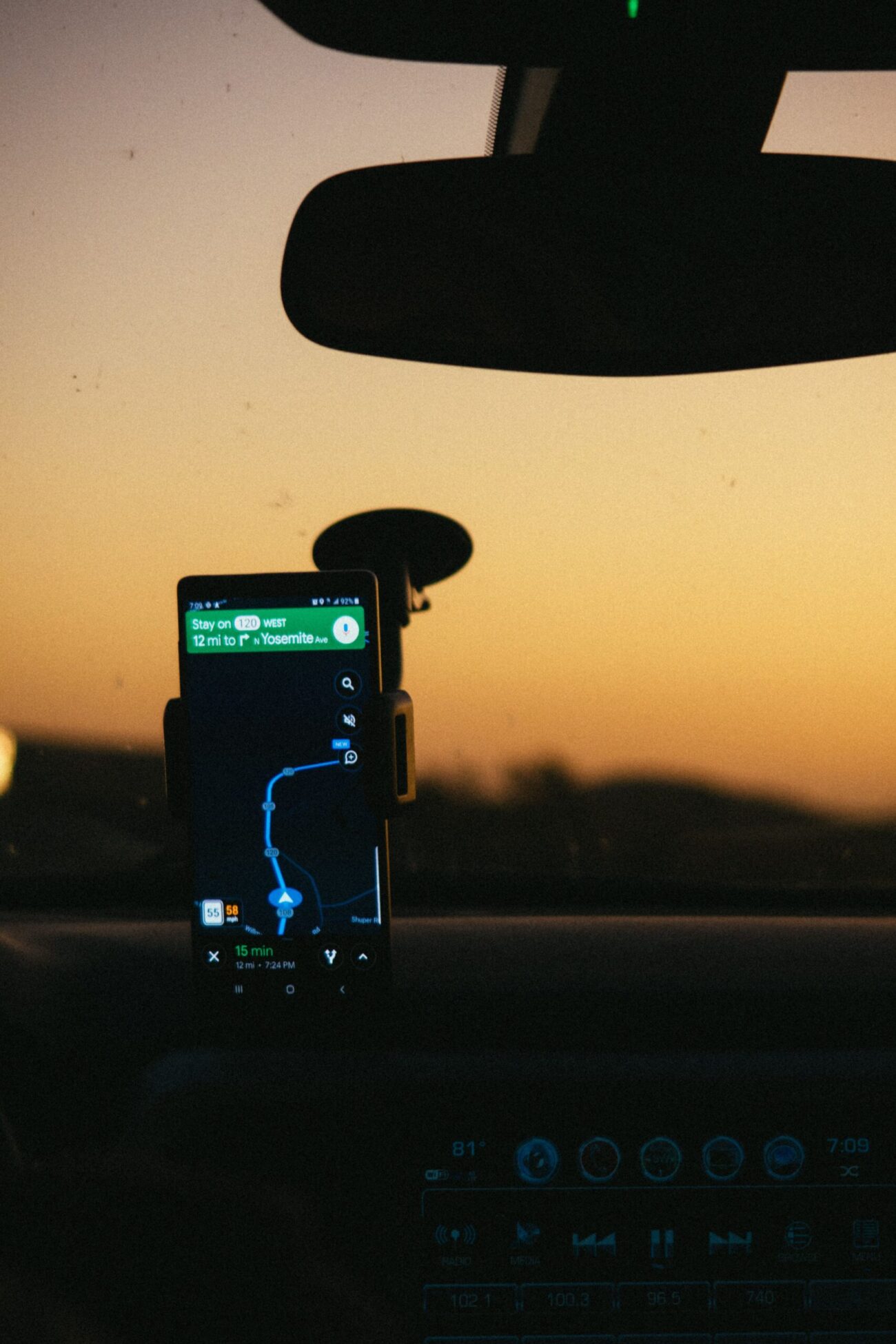
For people who regularly get motion sickness in cars, buses, or other moving vehicles, using a phone while traveling can quickly turn into a miserable experience. Reading messages, watching videos, or even scrolling through a webpage may bring on dizziness and nausea. Google is now introducing a feature designed to make those situations easier. After years of testing the idea, the company has begun rolling out Google Motion Assist. This Android feature uses moving dots on the display to reduce sensory conflict that can cause motion sickness.
The concept isn’t entirely new. Apple introduced a similar feature, Motion Cues, with iOS 18 in 2024. Google’s version follows much the same principle, but its arrival on Android has taken considerably longer than expected.
Why Do Phones Make Motion Sickness Worse?
Motion sickness can happen when the signals your brain receives from different parts of your body don’t agree. Your inner ear can sense that you’re moving, accelerating, or turning, while your eyes may be focused on a stationary object such as a phone screen. That mismatch can leave the brain struggling to reconcile two different versions of what’s happening.
For some people, the result is dizziness, discomfort, headaches, or nausea. A simple way to reduce the problem is to give your eyes visual information that matches the movement your body is experiencing. That’s essentially what Google’s new feature is attempting to do.
How Motion Assist Works
When Google Motion Assist is enabled, a series of small dots appears around the edges of the phone’s display. They sit on top of whatever you’re already viewing, meaning you don’t have to stop reading or using your phone.The dots aren’t simply moving randomly. The feature uses information from the phone’s accelerometer and gyroscope to detect how the device is moving. As the vehicle moves, the dots respond accordingly. For example, when the vehicle travels forward, the dots move in a corresponding direction on the display. When the vehicle turns, the movement of the dots changes as well. The idea is to provide the eyes with visual cues that better match the movement being detected by the body.
In effect, the dots are meant to imitate how objects around you would appear to move if you were looking outside instead of concentrating on a phone screen.
Google Has Been Working on It for a While
The arrival of Google Motion Assist may feel like a new development, but Google has actually been exploring the technology for some time. Testing reportedly began in 2024, although the feature didn’t become widely available at the time. Now, it is finally beginning to reach Android users.The rollout appears to be gradual rather than something everyone can activate immediately.
It’s Arriving Through Google Play Services
One of the unusual aspects of the rollout is that users don’t appear to need a standalone application or a traditional system update to get Motion Assist. Instead, the feature is being delivered through Google Play Services as part of a staged rollout. That means even people using compatible Pixel phones and running Android 17 may not see the feature right away. Google can gradually enable it for different devices and users as the rollout progresses. For now, the feature appears to be showing up on Pixel devices running Android 17, although broader availability could follow as Google expands its testing and deployment.
A Small Feature With a Practical Purpose
Motion Assist isn’t designed to transform how Android phones work. It’s a relatively simple visual addition, but for people who experience motion sickness, it could make a meaningful difference. The technology is based on a straightforward idea: if the brain receives visual information that better corresponds with the movement detected by the body, the uncomfortable sensory mismatch may be reduced. That makes Google Motion Assist one of those accessibility-focused features that many users might never need, while being potentially very useful to those who do.
For Android users who have avoided using their phones while traveling because of nausea or dizziness, the gradual arrival of this feature could make commuting and road trips a little more comfortable. And if Google’s rollout continues as expected, Google Motion Assist could eventually become a standard tool for Android users who struggle with motion sickness.
